Food industry2026-10-15T12:01:11+02:00

Food industry – odour and emission reduction

Mitarbeiterin in Hygienekleidung an einer Produktionslinie für Teigwaren

What does
catalytic exhaust air treatment achieve?

Roasting, baking and frying processes in particular often produce intense odours and persistent grease aerosols, which can lead to complaints from neighbours and strict requirements from the authorities. Our catalytic exhaust air treatment breaks down these organic compounds efficiently and without residue – without the use of chemicals. What matters most for the food industry: production quality and the natural taste of your food remain 100 % unaffected.

Challenge: emissions in food production

Thermal processes such as roasting, baking or frying produce a variety of emissions.
These include:

  • Intense odorous substances

  • Grease aerosols

  • Volatile organic compounds (VOCs)

  • Germs and bacteria

In residential areas in particular, these emissions frequently lead to serious complaints.
They are not only a nuisance but are also subject to increasingly strict requirements from the authorities.
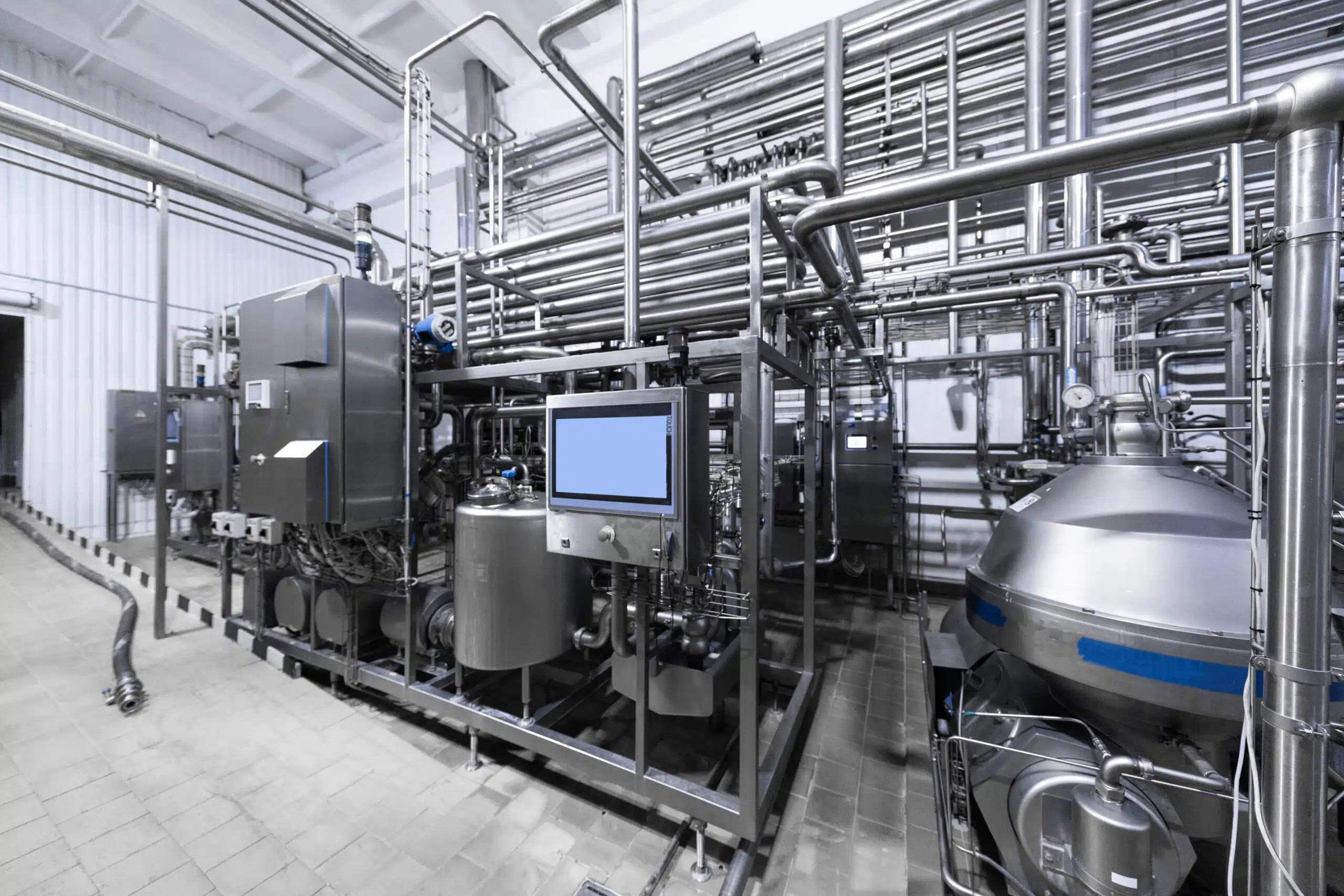
Lebensmittelverarbeitungsanlage mit Steuerungsterminal

The role of catalysts in the food industry

Catalysts are integrated into the exhaust air system and ensure residue-free oxidation of the pollutants:

Odours and VOCs → CO₂ + H₂O

Fats → CO₂ + H₂O

(hygienic and free of chemicals)

Your benefits with Pure Air

Odour neutralisation

Complete breakdown of intense roasting, baking and frying odours for good acceptance among local residents.

Grease aerosol treatment

Prevents hazardous grease deposits in the ductwork and thus minimises the risk of fire.

Hygienic design

Crevice-free stainless steel construction that meets strict hygiene and food safety standards.

No effect on taste

Your production remains safe: the quality and taste of the end product remain unchanged.

Background knowledge

Frequently asked questions

Answers on technology, legislation and processes.

How can odour emissions be reduced in the food industry?2026-10-15T13:08:53+02:00

Roasting, baking, frying and smoking processes in the food industry release strongly smelling organic compounds and fat aerosols. Catalytic exhaust air treatment breaks down and oxidises these odour-intensive hydrocarbons at low temperatures. The result is process exhaust air that is largely odour-neutral and compliant with regulations, which helps to avoid conflicts with neighbours and authorities.

Do fat aerosols have to be removed upstream of a catalyst?2026-10-15T13:08:53+02:00

As a rule, yes. Exhaust air from frying, roasting and smoking equipment contains not only gaseous odour compounds but also fat and oil droplets and soot particles. If these reach the catalyst unfiltered, they clog the surface, can carbonise and noticeably reduce the cleaning performance. For this reason, pre-separation is usually planned upstream of the catalyst, for example with grease filters, aerosol separators or thermal pretreatment. The right solution depends on the fat load, the exhaust air temperature and the cleaning effort you can manage in day-to-day operation. Maintenance access to the filters should also be considered from the outset so that filter changes and cleaning can be carried out without major effort. If a catalyst is already coated with fat or oil residues, chemical cleaning can often restore its activity. Describe your process, production hours and existing exhaust air ducting to us, and we will check which pre-separation suits your plant.

Can the heat from catalytic exhaust air treatment be used in roasting and baking processes?2026-10-15T13:08:53+02:00

Yes, this is often possible and is considered during the design phase. In catalytic oxidation, organic substances in the exhaust air are converted into carbon dioxide and water vapour. This releases reaction heat, and the cleaned gas leaves the catalyst at a higher temperature. This heat can be used via a heat exchanger, for example to preheat the exhaust air to be treated, to produce hot water or thermal oil, or to support drying and roasting processes. How much heat can usefully be recovered depends on the pollutant concentration, the flow rate, the operating hours and whether there is a suitable heat consumer on site. In plants with frequent downtimes or frequently changing recipes, the balance looks different from that of continuous operation. If you provide us with your exhaust air data and your heat demand, we will check whether heat recovery makes technical and economic sense for your process.

About Pure Air GmbH

Experience in exhaust gas treatment

Pure Air GmbH is built on many years of experience in catalytic exhaust gas treatment. Since 2025 we have brought this know-how together in Bamberg: we design catalysts for your plant, supply them and support them in operation, from CHP units to industrial installations.

Response
within 24 hours

Also for
third-party housings

Everything from
a single source

Engineer designing an exhaust gas treatment system on a CAD workstation

Contact us

Request a free quotation or get non-binding advice.

Pure Air GmbH
Am Börstig 12
96052 Bamberg

+49 (0) 951 96433250
+49 (0) 170 9630471

Request a free quotation

Go to Top