Industrial coating and curing2026-03-31T07:55:24+02:00

Industrial painting / curing
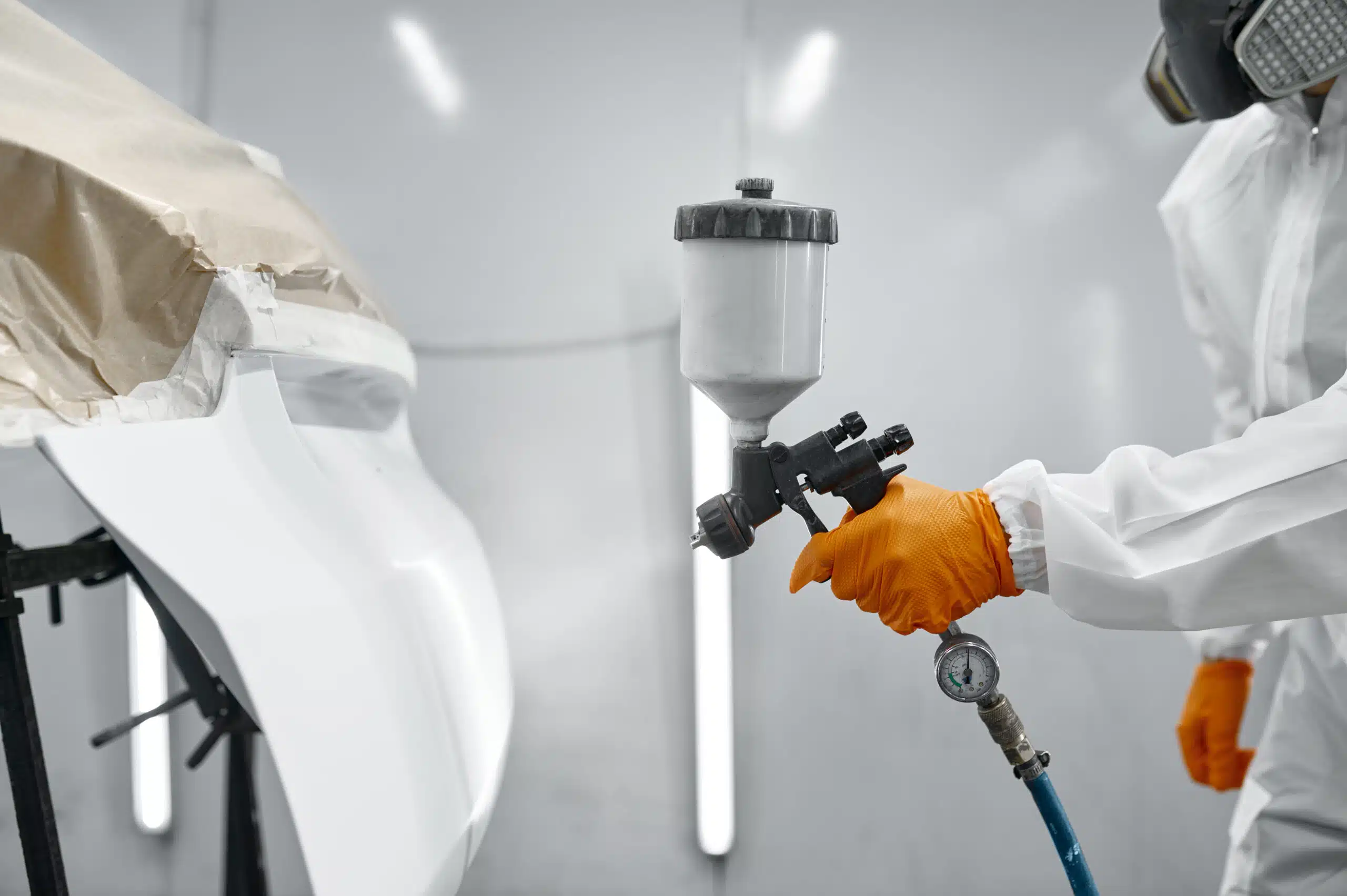
Painter coating a component with a spray gun

What is industrial painting?

Industrial painting is a key process in many industries – from the automotive industry and mechanical engineering to furniture production. The aim is to protect and finish surfaces and to optimise their function. Various methods are used, such as spray painting, powder coating or dip coating.

Challenge: VOC emissions in painting processes

Industrial painting releases considerable quantities of volatile organic compounds (VOCs).

These mainly originate from:

  • Solvents in the paint

  • Evaporation during flash-off

  • Thermal load during curing

Spray painting a wooden component

The role of catalysts in exhaust air treatment

To reduce VOC emissions effectively, catalytic exhaust gas treatment systems are used in industrial painting plants.

Catalysts enable pollutants to be oxidised at significantly lower temperatures than purely thermal processes:

VOCs → CO₂ + H₂O

This means:

Lower energy consumption combined with high cleaning performance

Advantages of catalytic solutions for painting plants

High removal efficiency

Reliable removal of VOCs and odorous substances – even under fluctuating loads

Energy savings

Lower operating temperatures considerably reduce energy demand

Compact design

Well suited for integration into existing painting lines

Sustainability

Significant improvement in environmental performance

Background knowledge

Frequently asked questions

Answers on technology, legislation and processes.

What effect do catalytic converters have on energy consumption?2026-03-27T13:55:41+01:00

As catalytic oxidation takes place at lower temperatures, less energy is required for exhaust air purification. This can significantly reduce operating costs and improve the overall energy efficiency of the system.

Can existing painting systems be retrofitted?2026-03-27T13:55:26+01:00

Yes, many systems can be retrofitted or optimized with catalytic systems. A precise analysis of the exhaust air flows is crucial in order to integrate the right solution.

When is the use of a catalytic converter particularly worthwhile?2026-03-27T13:55:13+01:00

Catalytic converters are particularly efficient at medium VOC concentrations and constant exhaust air flows. They offer advantages when the focus is on energy efficiency and operating costs.

Which exhaust air purification technologies are used in paint shops?2026-03-27T13:54:57+01:00

In addition to catalytic systems, thermal post-combustion (RTO), adsorption (e.g. activated carbon) or combinations of these processes are also used. The choice depends on the volume flow, VOC concentration and process conditions.

Why are VOCs such a big issue in paint shops?2026-03-27T13:54:44+01:00

Paints often contain solvents that are released as VOCs when they evaporate. These are harmful to the environment and health and are subject to strict legal requirements, which makes effective exhaust air purification absolutely essential.

Which process steps produce the most VOC emissions?2026-03-27T13:54:24+01:00

The highest VOC emissions typically occur during paint application, flash-off and thermal curing. Continuous exhaust air flows from drying ovens are particularly critical.

About Pure Air GmbH

Experience in exhaust gas treatment

Pure Air GmbH is built on many years of experience in catalytic exhaust gas treatment. Since 2025 we have brought this know-how together in Bamberg: we design catalysts for your plant, supply them and support them in operation, from CHP units to industrial installations.

Response
within 24 hours

Also for
third-party housings

Everything from
a single source

Engineer designing an exhaust gas treatment system on a CAD workstation

Contact us

Request a free quotation or get non-binding advice.

Pure Air GmbH
Am Börstig 12
96052 Bamberg

+49 (0) 951 96433250
+49 (0) 170 9630471

Request a free quotation

Go to Top