
Wood processing – efficient reduction of VOC, formaldehyde and odour emissions in the processing of wood-based materials

What is
exhaust air treatment in wood processing?
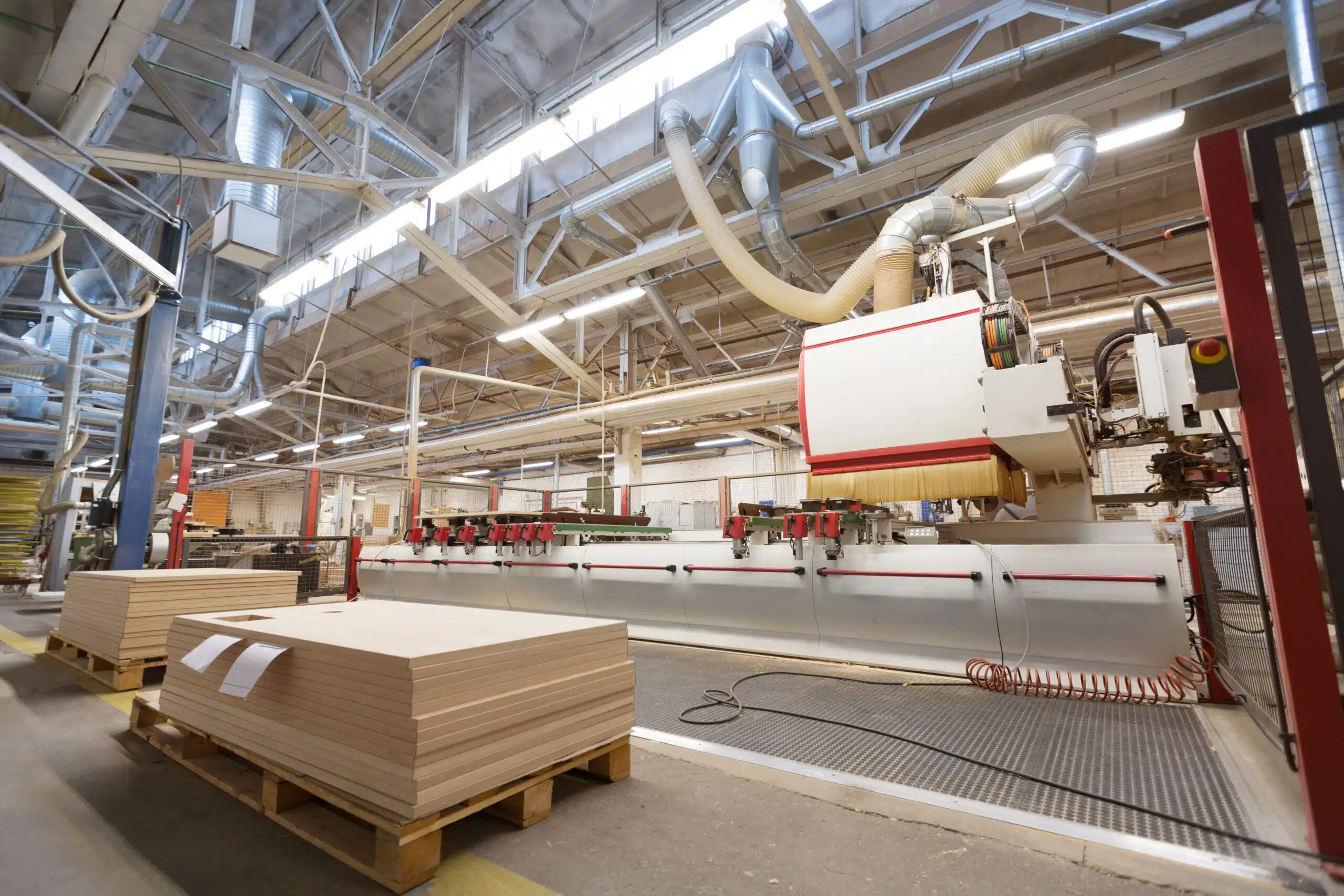
Industrial woodworking and wood processing – from sawmills and the production of chipboard, MDF and OSB panels to furniture and parquet production – uses thermal and mechanical finishing processes. Dryers, hot presses, gluing and coating stations generate high volume flows with specific gaseous emissions as a result of the process.
Modern exhaust air treatment ensures that formaldehyde, terpenes and solvents are effectively broken down in order to meet statutory requirements and avoid odour nuisance in the surrounding area.
Challenge: high volume flows, resins and formaldehyde emissions
Wood processing plants typically have warm, humid exhaust air streams containing a mixture of natural wood constituents and synthetic binders:
The role of catalysts in the wood industry
Catalytic oxidation processes have proven effective for the economical and environmentally sound removal of formaldehyde and VOCs.
Catalysts convert even diluted pollutant streams at low temperatures, without residue, into non-critical compounds:


This means:
Reliable compliance with the extremely strict formaldehyde limits with minimal supplementary fuel and low pressure drop.
Your benefits with Pure Air
Background knowledge
Frequently asked questions
Answers on technology, legislation and processes.
About Pure Air GmbH
Experience in exhaust gas treatment
Pure Air GmbH is built on many years of experience in catalytic exhaust gas treatment. Since 2025 we have brought this know-how together in Bamberg: we design catalysts for your plant, supply them and support them in operation, from CHP units to industrial installations.


